Deployed Critical Care Local Safety Standards for Invasive Procedures (LocSSIPS)

Warning

Objectives

Local Safety Standards for Invasive Procedures (LocSSIPs) Checklists for use in the in the deployed setting. 

Scope

This guideline provides LocSSIPs Checklists for Intubation, Chest drain insertion, CVC insertion, Percutaneous Tracheostomy insertion and Nasogastric tube insertion, for use in the deployed Critical Care (CC) setting.  

Audience

Critical Care Nurses and Doctors. 

Initial Assessment & Management

Safety Checklists for Invasive Procedures. Local Safety Standards for Invasive Procedures (LocSSIPs) have arisen from a framework document produced by NHS England’s Patient Safety Domain and the NatSSIPs group to promote safe practice locally.  

The aim of LocSSIPs is to: 

Build on the positive aspects of the WHO Safer Surgery Checklist, acknowledging that checklists alone are not enough to ensure patient safety.  

A team trained in this area with safe practice at the forefront of their thinking would reinforce best practice and improve patient safety. 

Prolonged Casualty Care

In the prolonged casualty care setting and Large Scale Combat Operations (LSCO) there will still be a requirement for invasive procedures for patient care. It is important to continue to consider patient safety and the use of processes like LocSIPPs to ensure this could be even more important in this setting.

In a prolonged hold it is important to consider ongoing care requirements post invasive procedure. This means looking at the care requirements after that procedure and looking at the current staffing, their skill mix, patient numbers and ongoing combat operations and making a decision whether the procedure remains the right thing in that context or whether less invasive options are possible.

Invasive Procedure Safety Checklist: INTUBATION

BEFORE THE PROCEDURE 

PREPARATION 

Have all members of the team introduced themselves? 

Yes 

No 

Is patient position optimised? 

Yes 

No 

Are spinal precautions required? 

Yes 

No 

Pre-oxygenate: 100% FiO2 for 3 mins 

Yes 

No 

Are nasal cannula for apnoeic ventilation needed? 

Yes 

No 

Is cricoid pressure considered and NGT aspirated? 

Yes 

No 

Post intubation sedation ready? 

Yes 

No 

EQUIPMENT & DRUGS 

Is monitoring attached ? (ECG, SpO2, BP on regular cycling, EtCO2) 

Yes 

No 

Is suction ready and working?

Yes 

No 

Is adequate venous access in place? 

Yes 

No 

Are working laryngoscope/s and bougie ready? 

Yes 

No 

Are endotracheal tube/s ready? 

Yes 

No 

Are oropharyngeal airways and LMA’s available? 

Yes 

No 

Is emergency trolley at the bedside? 

Yes 

No 

Are induction drugs, paralytics and vasopressors appropriate and ready? 

Yes 

No 

Any drug allergies known? 

Yes 

No 

TEAM 

Is senior help needed? 

Yes 

No 

Is role allocation clear? (Intubator, drugs, assistant, cricoid, MILS) 

Yes 

No 

Is difficult airway anticipated? 

Yes 

No 


TIME OUT 

Verbal confirmation between team members before start of procedure 


Were difficult airway plans discussed? 

Yes 

No 

Is senior help needed? 

Yes 

No 

Is role allocation clear? (intubator, drugs, assistant, cricoid, MILS) 

Yes 

No 

Is difficult airway anticipated? 

Yes 

No 

Any concerns about procedure? 

Yes 

No 

 
If you had any concerns about the procedure, how were these mitigated? 



SIGN OUT 


Endotracheal position confirmed (EtCO2 trace)? 

Yes 

No 

ETT length recorded and checked (B/L Air entry)? 

Yes 

No 

ETT secured and cuff pressure checked? 

Yes 

No 

Nasal O2 Removed? 

Yes 

No 

Appropriate ventilator settings confirmed? 

Yes 

No 

Analgesia and sedation started? 

Yes 

No 

Chest X-Ray required? 

Yes 

No 

Any adverse event? If so complete ASER. 

Yes 

No 

Hand over to nursing staff? 

Yes 

No 


Invasive Procedure Safety Checklist: CHEST DRAIN INSERTION

BEFORE THE PROCEDURE 

Indication: Eg Pneumothorax, Haemothorax


Patients identity checked and correct?

Yes 

No 

Does the procedure need to be done ASAP?

Yes 

No 

Has consent been appropriately taken?

Yes 

No 

Is suitable equipment available? (Including USS)

Yes 

No 

Confirm site and side of clinical abnormality.

Yes 

No 

Correlate clinical signs with CXR.

Yes 

No 

Anticoagulant drugs and clotting checked?

Yes 

No 

Any drug allergies known?

Yes 

No 

Safe site of drain insertion identified? (See picture)

Yes 

No 

Are there any concerns for this procedure in this patient?

Yes 

No 


TIME OUT 

Verbal confirmation between team members before start of procedure 


Is patient on appropriate ventilator setting and FiO2 100%?

Yes 

No 

Is patient adequately sedated, analgesed and/or paralaysed?

Yes 

No 

Is position optimal?  

Yes 

No 

All team members identified and roles clear?

Yes 

No 

Any concerns about procedure? 

Yes 

No 

 
If you had any concerns about the procedure, how were these mitigated? 
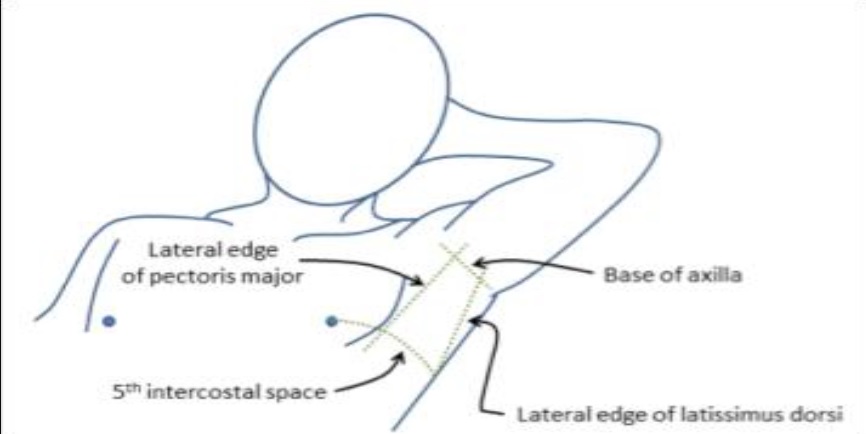


SIGN OUT 


Sutures, tubing and dressing secure?

Yes 

No 

Guidewire removed? (if seldinger)

Yes 

No 

Patient advised about care and not to raise drain above head? 

Yes 

No 

Are Antibiotics indicated? 

Yes 

No 

Is analgesia prescribed? 

Yes 

No 

In effusion, confirm 500ml not drained in first hour and specify to be informed if more than 1500ml in first 24 hours. 

Yes 

No 

Chest X-Ray requested?

Yes 

No 

Any adverse events? If so complete ASER.

Yes 

No 

Hand over to nursing staff? 

Yes 

No 


Invasive Procedure Safety Checklist: CVC INSERTION


BEFORE THE PROCEDURE 

Indication: Eg Difficult access, Central drug administration, TPN


Any known drug allergies?

Yes 

No 

Coagulation and bleeding risk checked?

Yes 

No 

Is all equipment available, including ultrasound?

Yes 

No 

Sterility of operator confirmed? (Hands scrubbed and appropriate PPE worn)

Yes 

No 

Confirm appropriate site chosen.

Yes 

No 

2% Chloraprep (2% Chlorhexadine Gluconate/70% isopropyl alcohol) applied and allowed to dry?

Yes 

No 

Large drape to cover patient in sterile manner used?

Yes 

No 

Are there any concerns for this procedure in this patient?

Yes 

No 


TIME OUT 

Verbal confirmation between team members before start of procedure 


Is patient appropriately positioned?

Yes 

No 

All team members introduced and roles clear?

Yes 

No 

Is position optimal?  

Yes 

No 

Any concerns about procedure? 

Yes 

No 

 
If you had any concerns about the procedure, how were these mitigated? 


SIGN OUT 


Correct injection caps applied with sterile technique?

Yes 

No 

Sterile dressing applied?

Yes 

No 

Guidewire removed?

Yes 

No 

Chest xray required/ordered? 

Yes 

No 

Any adverse events? If so, complete ASER 

Yes 

No 

Transduse CVC - CVP waveform present?

Record CVP here: 

If doubt - perform paired CVC and arterial gasses

Arterial Sats:                CVC sats:

Yes 

No 


Chest Xray Review 


Appropriate position on CXR  

Yes    

No   

Further actions required: 


Invasive Procedure Safety Checklist: PERCUTANEOUS TRACHEOSTOMY

BEFORE THE PROCEDURE 

Have all members of the team introduced themselves? 

Yes 

No 

Patient identity checked and correct? 

Yes 

No 

Consent completed? 

Yes 

No 

Is suitable tracheostomy and equipment available? (emergency trolley/bronchoscope) 

Yes 

No 

Is appropriate monitoring available?  (including EtCO2) 

Yes 

No 

Are there any Contraindications to performing the procedure? (High FiO2 >0.45, High PEEP >12, anatomical, vascular, coagulopathy) 

Yes 

No 

Medicines and coagulation checked? 

Yes 

No 

Any Known drug allergies? 

Yes 

No 

Is feed stopped and NG aspirated? 

Yes 

No 

Are spinal precautions required? 

Yes 

No 

Are there any concerns about this procedure for the patient? 

Yes 

No 

Level of difficulty anticipated prior to the start of the procedure 

None  
anticipated 

Possibly  
difficult 

Difficulty anticipated 


TIME OUT 

Verbal confirmation between team members before start of procedure 

Is patient on adequate ventilator settings and 100% FiO2? 

Yes 

No 

Is patient adequately sedated and paralysed? 

Yes 

No 

Is position optimal? 

Yes 

No 

Cuff tested as intact? 


All team members identified, and roles assigned? 

Yes 

No 

Any concerns about procedure? 

Yes 

No 

 
If you had any concerns about the procedure, how were these mitigated? 


SIGN OUT 

Tracheostomy position confirmed with Bronchoscope? 

Yes 

No 

Ventilator settings reviewed post procedure? 

Yes 

No 

Sedation reviewed? 

Yes 

No 

Any adverse event? If so, complete ASER

Yes 

No 

Post procedure hand over given to nursing staff? 

Yes 

No 


Invasive Procedure Safety Checklist: NG TUBE INSERTION

BEFORE THE PROCEDURE 

Patient identity checked as correct? 

Yes 

No 

Appropriate consent completed? 

Yes 

No 

Check NG equipment and tube size 

Yes 

No 

NG measurement (                   cms) 

Yes 

No 

Are there any contraindications to  

performing the procedure? (Coagulopathy/base of skull#/ previous sphenoidal surgery) 

Yes 

No 

Base of skull# consult Neurosurgery and consider oral gastric tube 

Yes 

No 

Are there any concerns about this procedure for the patient? 

Yes 

No 


TIME OUT 

Verbal confirmation between team members before start of procedure 

Base of skull # ruled out if applicable? 

Yes 

No 

Is position optimal? 

Yes 

No 

All team members identified and 

roles assigned? 

Yes 

No 

Any concerns about procedure? 

Yes 

No 

Any adverse events? If so complete ASER

Yes 

No 

 
If you had any concerns about the procedure, how were these mitigated? 


SIGN OUT 

Any equipment issues? 

Yes 

No 

X-ray requested? 

Yes 

No 

Aspirate NG and Aspirate PH test completed 

Yes 

No 

Length of NGT documented as: _____

Yes 

No 

Post procedure hand over given to nursing staff? 

Yes 

No 

NGT placement confirmed, and X-ray reviewed by 


Yes 

No 


Last reviewed: 24/01/2026

Next review date: 24/01/2027

References

Faculty of Intensive Care Medicine, LocSSIPS safety Checklist templates. Available at: LocSSIPs | The Faculty of Intensive Car Medicine